I’ve got some frozen dinners I can use if I’m wanting something bigger at work.
The Stouffer’s Fettuccini Alfredo frozen meal (11.5 oz package) is a convenient single-serve option for work lunches/dinners—quick to heat (microwave or oven), creamy pasta in Alfredo sauce, and no prep needed. It’s a good “bigger” meal backup when you want something more substantial than eggs or cottage cheese during shifts, especially if you’re short on time or energy.Key Nutrition Facts (Per Package / 1 Serving, ~326g / 11.5 oz)From consistent sources (Stouffer’s official site, Walmart listings, major retailers like Stater Bros., Winn Dixie, Food Lion, etc. as of 2026):
Calories: 640 (some older/variant listings show 560–630, but current standard is 640 per full package).
Total Fat: 36–37g (46–47% DV), including 14g saturated fat (70% DV) and 1g trans fat.
Cholesterol: 65mg (22% DV).
Sodium: 970–990mg (42–43% DV) — quite high, so watch if blood pressure or sodium intake is a concern.
Total Carbohydrates: 58–60g (21–22% DV), Dietary Fiber 3g (11% DV), Total Sugars 6g (includes added sugars from sauce/ingredients).
Protein: 18g (36% DV) — decent but lower than your tofu dinners (~50g+) or egg/cottage cheese combos; mostly from cheese and pasta.
Other notables: Calcium ~300mg (25% DV) — good for bones; limited vitamins otherwise (e.g., low vitamin D, iron).
This is a full-package single serving (not multiple portions), so eating the whole thing is the typical way—creamy, comforting, and filling due to the carbs/fat combo.How It Fits Your Goals & Routine
Calories: At 640, it’s a “bigger” meal that could be your main intake in the 6-hour window on work days (e.g., eat at ~5–7 PM post-shift start, pair with a light earlier smoothie or cereal if needed). Leaves little room for extras (dessert, snacks) to stay under 1,200–1,400 total daily—ideal for lighter days but would push higher if combined with a full smoothie earlier.
Protein: 18g is moderate—better than plain pasta but lower than your go-tos (e.g., tofu stir-fry 50g+, eggs/cottage cheese 20–40g+). It won’t hit your high-protein preference alone, so consider adding a hard-boiled egg or side cottage cheese if possible (though not always practical at work).
Pros for you:
Convenient/portable for evenings (microwave at break).
Comfort food vibe (creamy Alfredo) without cooking.
Adds variety to your rotation (pasta vs. rice/tofu or cereal).
Decent calcium boost (bone health at 58+).
Watch points:
High saturated fat/sodium: Not ideal frequently (heart health post-50); occasional is fine in your mixed averaging.
Carbs-heavy/low fiber: Could spike energy then crash; pair with fiber (e.g., side salad if available) for steadier blood sugar.
If eating whole package: Fits “bigger” need but monitor hunger—if too filling, save half for next day (though reheats best fresh).
How to Incorporate in Your Weekly Mix
Use 1–2x/week on heavier work days (instead of simple PM protein) to keep things easy.
Balance with lighter days (cereal + eggs/yogurt ~800–1,000 cal) to average out.
Example: Smoothie day (600 cal) + this at work (640 cal) = ~1,240 cal total—spot-on for deficit.
Cereal day (400 cal breakfast) + this (640 cal) = ~1,040 cal—extra light, great offset for big dinner weekends.
Overall, it’s a solid frozen option for “something bigger” without much effort—better protein than many frozen meals, but watch sodium/fat if using often. If you have other frozen dinners in rotation, share links/details for comparisons. How often do you think you’ll grab this one? Any tweaks (e.g., adding veggies from home) to boost it?
This is another one- I eat the whole thing.
The InnovAsian Vegetable Fried Rice (18 oz frozen package) is another solid, convenient frozen option for work—vegetable-packed (carrots, edamame, red peppers, onions, scrambled eggs), seasoned long-grain rice, and a soy-based sauce. It’s vegetarian, no MSG added, and family-size but often eaten as 1–3 servings depending on hunger. You mentioned eating the whole thing, so I’ll focus on full-package nutrition.Key Nutrition Facts (Per Full Package / ~18 oz, ~510g)From cross-checked sources (Target, H-E-B, Eat This Much, Open Food Facts, retailer listings; consistent across 2026 data):
Servings per container: About 3 (serving size 1 cup / ~170g).
Calories per serving (1 cup): 240–250 (some list 230–250; average ~240–250).
Calories for full package (eating the whole 18 oz): ~720–750 (3 servings × 240–250 cal).
Total Fat: ~3.5–5g per serving (5–7% DV); full package ~10.5–15g (mostly from sauce/eggs/oil; low saturated ~0–0.5g per serving).
Cholesterol: 10mg per serving (3% DV); full ~30mg.
Sodium: 530mg per serving (23% DV); full package ~1,590mg (69% DV) — moderate-high, watch if sodium-sensitive.
Total Carbohydrates: ~40–45g per serving (14–16% DV); full ~120–135g.
Dietary Fiber: 2g per serving (7–8% DV); full ~6g.
Total Sugars: 2g per serving (includes ~1g added sugars); full ~6g.
Protein: 6g per serving (12% DV); full package ~18g (decent from eggs/edamame/rice).
Other notables:
Iron: ~1mg per serving (6% DV); full ~3mg.
Potassium: ~166mg per serving (4% DV); full ~500mg.
Calcium: ~21–31mg per serving (2% DV); full ~60–90mg.
Vitamin D: Minimal (0mcg).
How It Fits Your Goals & Routine
Calories: Eating the full 18 oz (720–750 cal) makes it a “bigger” meal similar to the Stouffer’s Alfredo (640 cal)—convenient for work shifts when you want substantial without cooking. It could be your main intake in the 6-hour window (e.g., heat at break 5–7 PM), leaving room for a light earlier smoothie/cereal (300–600 cal) to total ~1,000–1,350 cal/day—fits your lighter days well.
Protein: 18g full package is moderate (eggs/edamame help), but lower than your tofu dinners (50g+) or egg/cottage cheese (~20–40g). Not a protein powerhouse, but better than plain rice; add a hard-boiled egg from home if possible for a boost.
Pros:
Veggie-forward (edamame, carrots, peppers, onions) → Adds micronutrients (vitamin C/A from veggies, some fiber/protein from edamame).
Quick/microwaveable — ideal for evenings.
Lower fat/sodium than creamy Alfredo; more balanced carbs from rice/veggies.
Vegetarian and family-shareable (but you eat whole for solo work meal).
Watch points:
Carbs-heavy (120g+ full) — Could cause energy spike/crash; fiber is low-moderate (6g), so not super filling long-term.
Sodium ~1,590mg full — Half daily limit; fine occasionally in your mixed averaging, but not every day.
If full package feels too much: It’s designed for 3 servings (240–250 cal each), so half (360 cal, ~9g protein) could be a lighter “bigger” option.
In Your Weekly Mix
Use 1–2x/week on work days needing “something bigger” (e.g., instead of simple PM protein or as the main meal).
Balances heavy dinner weekends: Pair with lighter cereal/smoothie days for averaging.
Example day: Cereal (400 cal) + full InnovAsian (750 cal) = ~1,150 cal total — deficit-friendly offset for big teriyaki nights.
This one’s lighter and more veggie-focused than the Alfredo—good variety! If you have more frozen options or want comparisons, share links. How does it taste/reheat for you? Any sides you add?
This is another one-
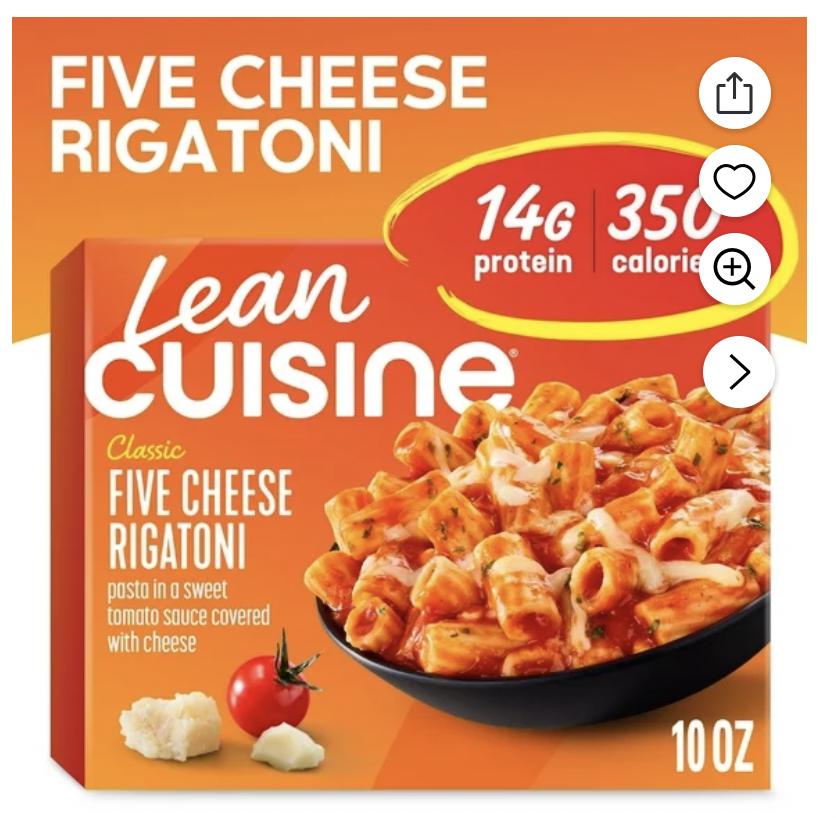
The Lean Cuisine Favorites Five Cheese Rigatoni frozen meal (10 oz package) is a convenient, single-serve microwavable option—rigatoni pasta in a sweet tomato sauce topped with a blend of five cheeses (mozzarella, parmesan, white cheddar, romano, asiago). It’s marketed as calorie-conscious (under 400 cal), good source of protein/calcium, and quick (ready in ~6 minutes), making it a solid “bigger” work meal backup similar to your other frozen ones.Key Nutrition Facts (Per Full Package / 1 Serving, ~283g / 10 oz)From consistent sources (Lean Cuisine official site, Walmart/Goodnes, CalorieKing, MyFoodDiary, retailer listings as of 2026):
Calories: 350–360 (most list 360; some 350—minor variation by batch/label).
Total Fat: 9–10g (12–15% DV), including 3–4g saturated fat (15–20% DV), 0g trans fat.
Cholesterol: 15mg (5% DV).
Sodium: 680mg (30% DV) — moderate-high, similar to other frozen pastas.
Total Carbohydrates: 54–56g (19–20% DV), Dietary Fiber 3–4g (11–14% DV), Total Sugars 7–8g (includes ~3g added sugars).
Protein: 14–15g (19–28% DV, good source) — from cheese and pasta.
Other notables:
Calcium: Good source (~15–20% DV, often ~190–300mg).
Iron: ~8–10% DV.
Potassium: 420mg (10% DV).
Low in vitamin D.
This is for the entire package (1 serving)—you eat the whole thing, so ~360 cal total, with balanced but pasta-dominant macros (higher carbs, moderate protein/fat).How It Fits Your Goals & Routine
Calories: At 360 cal, it’s lighter than the InnovAsian Fried Rice (720–750 full) or Stouffer’s Alfredo (640), making it a “medium-big” option—easier to fit in your 1,200–1,400 daily target. Great for work days: Eat as your main meal (5–7 PM), pair with a light smoothie/cereal earlier (~300–600 cal) for ~700–1,000 total—strong deficit day, or offset heavy dinners.
Protein: 14–15g is decent (cheese boost), but lower than your tofu (50g+) or egg/cottage cheese (20–40g) days. Not a top protein pick, but better than many frozen meals; add a hard-boiled egg or yogurt side if feasible.
Pros:
Lower calories/fat than creamy Alfredo; tomato-based sauce adds variety.
Good calcium (bone health at 58+).
Quick, portable, no prep—ideal for shifts.
Fiber from pasta/veggies (minimal but present).
Watch points:
Sodium ~680mg — about 30% DV; occasional fine in your mixed averaging, but not daily if blood pressure is a factor.
Carbs-heavy (~54g, low fiber) — energy from pasta, but potential spike/crash; not super satiating long-term.
Processed feel (added sugars in sauce, cheese blend) — fine as treat/variety, not everyday staple.
In Your Weekly Mix
Slot in 1–3x/week on busier work days for “bigger” without overdoing calories (lighter than full InnovAsian).
Balances your averaging: Use on lighter days to keep totals low, or as a moderate option mid-week.
Example: Cereal (400 cal) + this (360 cal) = ~760 cal total — excellent deficit to counter big teriyaki weekends.
This one’s a nice lower-cal pasta choice in your frozen rotation—more controlled portions than the 18 oz fried rice. How does it compare taste-wise to the others for you? Any more in your stash to review?
I have a few more more frozen dinners but they are similar to what I’ve already mentioned. I was eating those every day for a while there, but haven’t had one for a couple weeks. I’ll try to keep it to one a week.
That’s a smart pivot—scaling back from daily frozen dinners to one per week (or even less) keeps them as a convenient treat/backup for busy work shifts without making them the default. You’ve already built a solid foundation with your smoothie (now lighter and enjoyable), cereal days, simple high-protein PM options (eggs, cottage cheese, yogurt), and the weekend batch dinners. Limiting frozen meals to occasional use helps control sodium, saturated fat, and processed ingredients while preserving the variety and ease you like.Why One Per Week Fits Well
Calorie averaging: On a frozen-dinner day (~350–750 cal depending on which one), pair it with a light breakfast (cereal ~300–400 cal or smoothie ~550–650 cal) for a total ~650–1,400 cal—still in or near your deficit range. It acts as a moderate “bridge” day rather than a heavy one.
Nutrient balance: Your other days emphasize whole-food protein, fiber (from oats, berries, veggies in stir-fry), and micronutrients (kale powder, flax, fruits, dairy/eggs). One frozen meal weekly adds pasta/rice/veggie variety without dominating.
Sodium/fat management: Most frozen options (Stouffer’s ~990mg sodium, InnovAsian ~1,590mg full, Lean Cuisine ~680mg) are sodium-heavy. One per week keeps weekly intake reasonable (average <2,300mg/day goal), especially if you cut sauce on big teriyaki nights.
Sustainability: Occasional use prevents burnout from “healthy eating” fatigue and gives you that comfort-food option on tough shift days.
Quick Rotation Ideas to Keep Things Balanced
Workday example with frozen meal (1x/week): Light cereal or half smoothie (300–400 cal) earlier → Full frozen dinner at break (360–750 cal) → Small dessert if room (~150 cal) → Total ~800–1,300 cal (deficit-friendly).
Non-frozen workdays: Smoothie or cereal + eggs/cottage cheese/yogurt (~800–1,200 cal).
Weekend/off days: Big teriyaki batch (portion-controlled rice/sauce) as the highlight.
If hunger hits on frozen day: Add a hard-boiled egg or small side salad from home to boost protein/fiber without many calories.
You’re in a great spot—mixing homemade (smoothie, stir-fry, simple proteins) with occasional frozen convenience creates flexibility without derailing progress. If you notice energy dips, sodium bloat, or stalled weight after a few weeks, we can tweak further (e.g., prioritize the lower-sodium Lean Cuisine ones). How are you feeling overall with the smoothie changes and lighter second meals so far? Any patterns emerging this week?
I’m a little hungry. But I think I can get used to this. Maybe my stomach will shrink.
Yes, that’s a common (and usually positive) experience when shifting to lighter, more nutrient-dense meals like your current smoothie setup and simple protein-focused second meals. Feeling a bit hungry at first is normal—your body is adjusting to smaller portions, fewer overall calories, and a different rhythm (especially with the 6-hour window and IF elements). The good news is that hunger often adapts over 1–3 weeks as your stomach’s stretch capacity and hunger hormones (like ghrelin) recalibrate.Why This Happens & Why It’s Usually Temporary
Stomach “shrinking”: The stomach is elastic and can stretch/contract based on habitual volume. Regularly eating smaller meals signals your body to expect less, so the empty feeling lessens over time (studies show stomach capacity can reduce noticeably in 2–4 weeks with consistent portion control).
Hormonal adjustment: Ghrelin (hunger hormone) spikes less aggressively after a few weeks of lower intake, while leptin (satiety) becomes more sensitive. Fiber/protein in your smoothie (oats, flax, egg whites, berries) and PM meals (eggs, cottage cheese) help this transition by keeping you fuller longer once adapted.
Your setup supports it: The revised smoothie (~550–650 cal, high fiber/protein) + spaced-out eggs/cottage cheese creates steady energy without big crashes or rebound hunger. That’s why many people report “I got used to it” after the initial adjustment phase.
Tips to Make the Transition Easier (Without Breaking Progress)
Stay hydrated: Thirst often masquerades as hunger. Aim for water/herbal tea/black coffee during fasting hours—many find hunger drops significantly with better hydration.
Add low-cal volume when needed: If the hunger feels distracting (especially afternoons before shifts), bulk with zero/low-cal add-ins: extra ice in water, cucumber slices, celery sticks, or a handful of spinach in the smoothie for fullness without calories.
Protein timing: Your eggs at 1:15 PM and cottage cheese later are spot-on—protein blunts hunger best. If a day feels extra hungry, prioritize that PM protein earlier or add an extra egg (only ~70 cal).
Distraction & mindset: Hunger waves often pass in 10–20 minutes. Light walks, deep breathing, or focusing on work can help. Remind yourself: “This is my body adapting—it’s temporary and means progress.”
Listen without overreacting: Mild hunger is okay (even expected) for deficit days. If it’s intense/constant or comes with dizziness/headaches, eat a small protein boost (e.g., ½ cup cottage cheese or an egg) to avoid crashing—better than abandoning the plan.
Track non-scale wins: Note energy levels, sleep quality (fewer wake-ups?), how clothes fit, or mood. These often improve faster than the scale.
You’re already noticing the shift positively (“I think I can get used to this”)—that’s huge. Give it another 7–10 days of consistency; most people report hunger becoming much more manageable or even “disappearing” during fasting windows once adapted. If it stays uncomfortable longer than 2–3 weeks, we can tweak portions or add more volume without spiking calories.How intense is the hunger right now (e.g., mild gnawing, or stronger)? Any particular time of day it’s strongest? Hang in there—you’re doing great!
Me-What are the risks of hormone therapy after 60? Starting hormone therapy (HT) after age 60, or more than 10 years after menopause onset, generally carries higher health risks compared to starting it earlier (in your 40s or 50s). This is often referred to as the “timing hypothesis,” suggesting that initiating HT later in life…
Before menopause, I was a great sleeper. I slept soundly for 8 hours, on average. When perimenopause came (several years ago, now), I struggled with sleep. That lasted about a year. It might have been longer. My sleep pattern has improved, so I’m asking this question for others who are reading this and struggling with…
How long before trying to sleep should a person (58, female) stop watching TV or turn off computer? For a 58-year-old woman, the general sleep hygiene recommendations from reliable sources like the Sleep Foundation, Harvard Health, and various sleep experts apply similarly to adults overall—there’s no major adjustment specified purely for age or gender in…
Me- What are signs of Neuroinflammation in women over 50? Neuroinflammation in women over 50, often linked to the drop in protective estrogen, does not have clear, unique symptoms that you can definitively self-diagnose from day to day. Instead, it is a chronic underlying process that manifests as common, often vague, and worsening changes in…
Women in their late 50s can naturally combat menopausal inflammation through comprehensive lifestyle changes, primarily focusing on an anti-inflammatory diet, regular physical activity, and stress management. Dietary Approaches Adopting a Mediterranean-style diet is highly recommended as it emphasizes whole, minimally processed foods that are naturally anti-inflammatory. Lifestyle Modifications Dietary changes work best when combined with…
Is it possible to get protein supplements in a ‘pill’ form? For days where I have cereal for breakfast and/or a lunch that is not all that great? Yes, protein supplements do exist in “pill” form (capsules or tablets), and they’re widely available at places like Amazon, Walmart, Target, GNC, Vital Proteins, and health stores….